
RecoverySoftware’s Blog – Page 3

Discover effective methods and step-by-step guides to recover data from your devices. Stay ahead of the game with our advice on retrieval data or storage security.

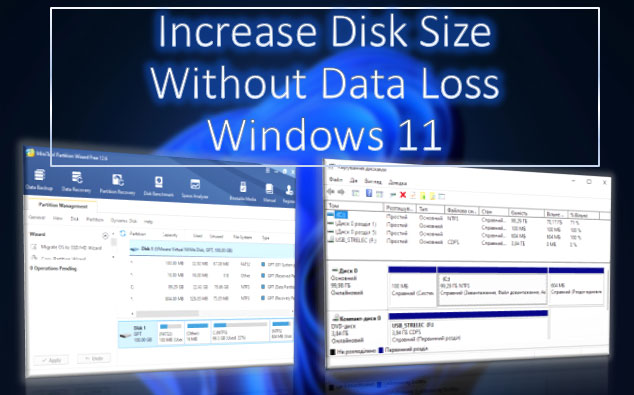
What to do if there is not enough free space on drives C, D, E, etc.? If our needs require a larger disk volume, we can increase the size of one disk by reducing the size of another. This task can be accomplished using the built-in tools of Windows 11 or with third-party disk management programs that offer more flexible operations. Let's take a detailed look at how to extend a disk in Windows 11.

How to Recover Data from Parallels Virtual Machines if the data is lost due to accidental deletion or software failure? How to transfer data from a Parallels virtual machine if it is damaged and cannot be restored? In the first case, data recovery software might be the only solution. In the second case, you can try to take some steps to revive the machine. If this proves impossible, the same data recovery programs with special functionality—support for virtual hard drives—can help.

Hard Drive Failure—whether it's an internal or external drive, an HDD or SSD—can lead to significant issues. We might lose a well-configured operating system along with all installed and customized programs. But most importantly, we risk losing valuable data. What are the signs that a hard drive is failing? How can we prevent data loss? And what should we do with the failing hard drive?

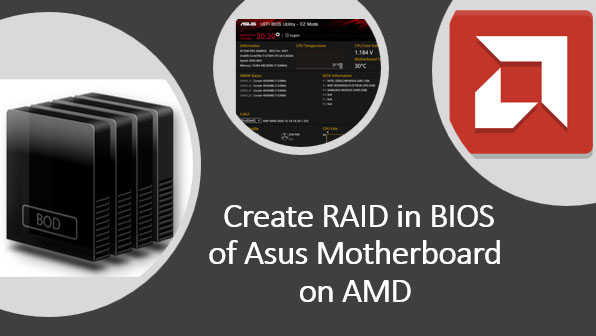
How to Create a Hardware RAID on a Motherboard? Each motherboard manufacturer provides its own interface, organization, and BIOS functions. Therefore, the process of creating a disk array will vary depending on the motherboard. The hardware RAID itself—supported configurations (levels) and their capabilities—is determined by the RAID technology from the chipset manufacturer, namely Intel and AMD.

Below, we will examine in detail the implementation of RAID on an Asus motherboard using the AMD platform. We will explore the capabilities of modern AMD hardware RAID technology, how to create such a RAID, how to delete it, and what to do if you encounter issues.

How to Recover Data from a hard drive after RAID? Whether the hard drive has been placed in a RAID array or, conversely, after the RAID has been removed, the task is challenging. In the latter case, it may require a minimum number of operational hard drives or even all hard drives that were part of the RAID array, depending on the RAID configuration (level). We will tackle this task using effective data recovery software.

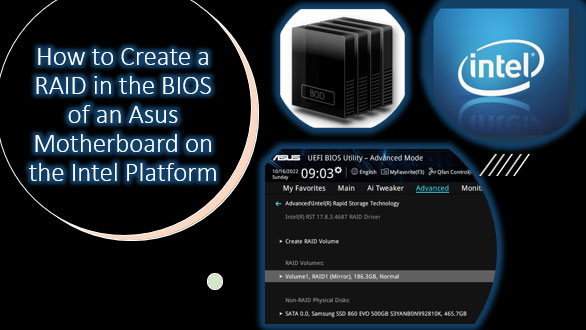
How to Create a Hardware RAID on a Motherboard? Each motherboard manufacturer has its own BIOS interface and functionality, which means the procedure can vary. However, the core operation of hardware RAID using a motherboard is determined by the disk array implementation technology. There are implementations from both Intel and AMD.

In this article, we will take a detailed look at the implementation of RAID in the BIOS of an Asus motherboard on the Intel platform – how to create a RAID, what to do if you encounter issues, and how to remove it.